NCTO CEO Kim Glas Highlights How Ending De Minimis Helped Level the Playing Field for U.S. Manufacturers & Protect Consumers
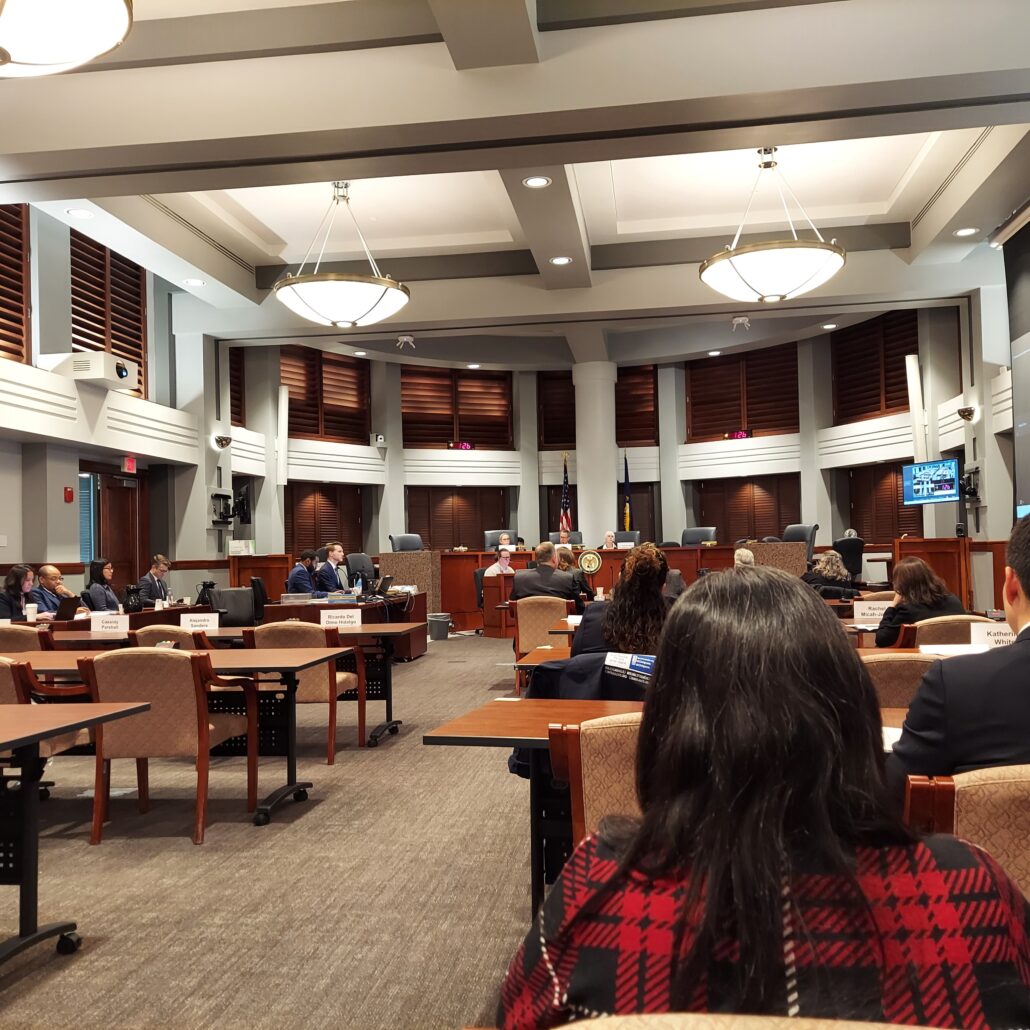
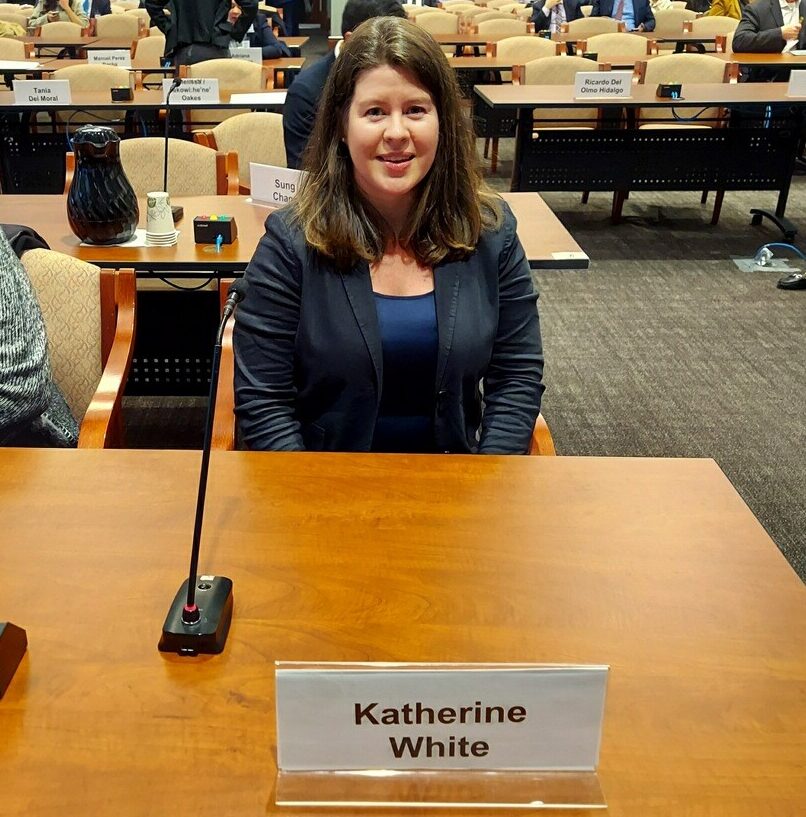
National Council of Textile Organization (NCTO) President and CEO Kim Glas participated in a panel discussion hosted by The Capitol Forum at the National Press Club last week, hailing the closure of the dangerous de minimis loophole, which staunched the flood of 1.4 billion uninspected low-value imports into the U.S. market.
She highlighted how ending de minimis for commercial shipments globally has helped level the playing field for U.S. manufacturers, boost the safety of American consumers, and curb the drug epidemic.
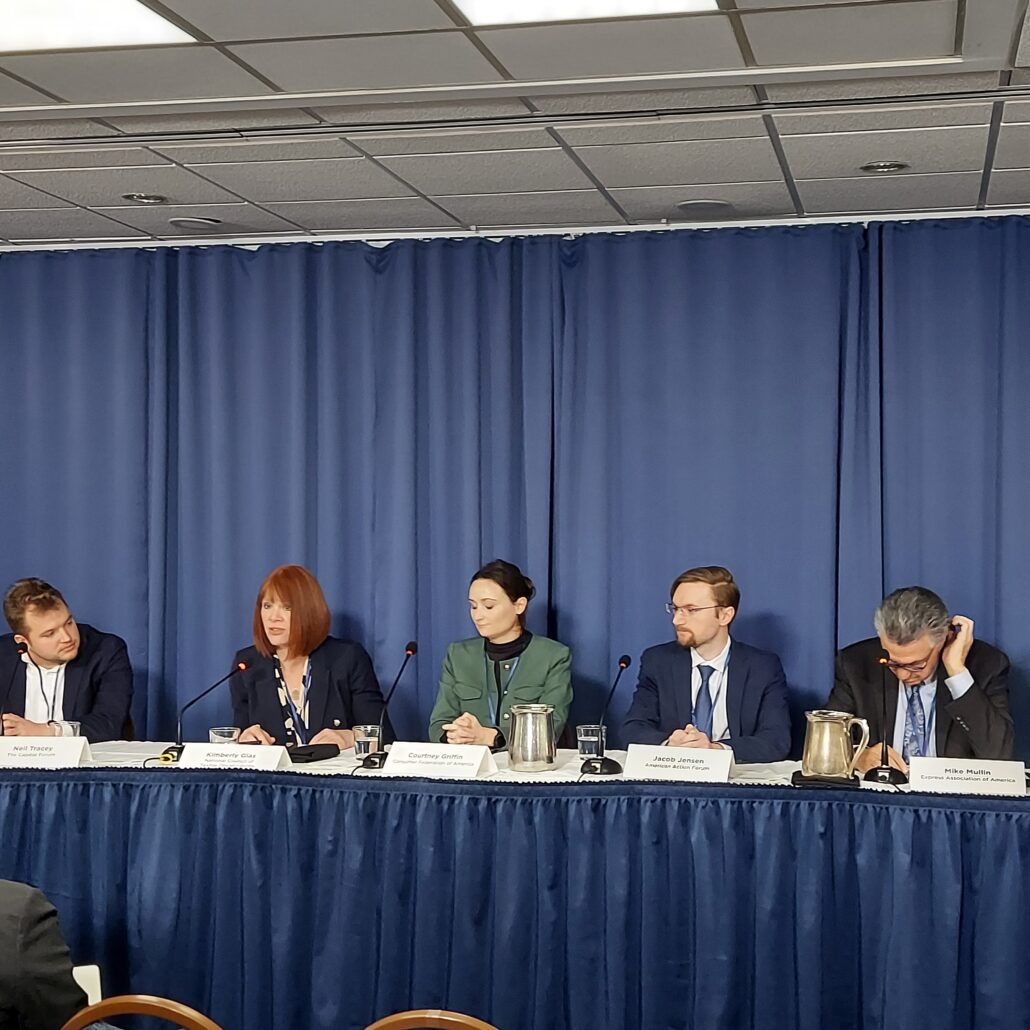
Glas was joined on the panel by representatives from the Consumer Federation of America, who highlighted the consumer safety dangers associated with de minimis; an international trade attorney from Brussels who outlined the significant problems the European Union is facing with de minimis; the Express Shippers Association; and an analyst on consumer prices with the American Action Forum.
An “Avalanche” of Uninspected Low-Value Packages
NCTO and the entire textile industry have been strong advocates for ending de minimis for the past eight years, Glas said, kicking off the panel discussion.
The domestic textile industry, which employs 471,000 workers across the United States, is an innovative and resilient industry and the second largest exporter of textiles in the world. But this vibrant industry was severely harmed be the loophole, which allowed 1.4 billion packages into the U.S. marketplace virtually uninspected and duty free, until it was closed by the Trump administration in August and also codified into law by Congress.
Several years ago, reporters did not know what de minimis even was when Glas started speaking to them about it. But as time went on, more news coverage spread as strong advocacy on both sides of Capitol Hill, from House Ways and Means Chairman Jason Smith (R-MO) to Rep. Earl Blumenauer, a Democrat from Oregon, began pushing for reforms.
“De minimis became an avalanche of duty-free trade to the United State marketplace that we could not control. It was a wildfire out of control. You cannot inspect 1.4 billion packages coming in a year into the U.S. marketplace,” Glas said.
In addition, half of the packages were estimated to be textile and apparel products.
“When did Congress sign a free trade agreement with the world? As long as you send it in a small package you get duty free access?” Glas asked.
She noted the loophole undermined all trade regimes—from Biden to the Trump administration. The U.S. textile industry joined forces with fentanyl families, law enforcement groups, fentanyl victim families and unions to form the Coalition to Close the De Minimis Loophole to launch an advocacy and education campaign in Washington—and Congress and the administration took note.
In August, President Trump issued an executive order ending de minimis for all commercial shipments and Congress passed bipartisan legislation that codified the ban on de minimis beginning in July 2027.
However, uncertainty around newly imposed reciprocal tariffs on imports from most countries, coupled with a rise in trade fraud and the continuing tariff evasion and illegal trade practices implemented by China and other Asian countries has countered the benefits of the de minimis loophole closure.
Europe Faces the Same De Minimis Problem—on a Larger Scale
Yves Melin, an international trade and customs lawyer based in Brussels, described a European Union de minimis system that mirrors — and exceeds — the U.S. problem. Europe processes an estimated 4 billion to 5 billion low-value parcels annually, with a threshold of €150. Melin warned that cross-border e-commerce has replaced containerized trade with billions of individualized parcels, rendering traditional customs enforcement nearly impossible.
“We are in deeper trouble than you [the U.S.] were,” Melin said. “This is largely fed by Chinese manufacturers and possibly by China’s government. There is an intentionality behind it.”
He emphasized that Chinese sellers now bypass established distributors and sell directly to consumers, eroding accountability. In one example, he pointed to French customs inspections of Shein and Temu parcels, which found roughly 80 percent noncompliance with EU regulations. The result is widespread consumer safety risk, unfair competition, and downstream environmental damage — particularly in textiles, where low-quality garments overwhelm recycling systems.
The EU is now moving toward reform, Melin said.
The EU said last week it plans to impose a 3 euro duty on low-value e-commerce parcels beginning in July 2026, which will remain in place “until a permanent solution is found to eliminate the de minimis duties exemption for online purchases below 150 euros, the EU’s Council of its 27 governments said in a statement,” according to a Reuters article.
Glas noted during the discussion that Europe’s experience closely tracks the U.S. trajectory and that countries around the world — including Brazil and South Africa — are moving in the same direction for the same reasons: trade fairness, consumer safety, and enforcement integrity.
She stressed that no serious policymaker in Europe or around the world is considering expanding de minimis; the debate is about how quickly and completely to dismantle it.
De Minimis Exposes Consumer Product Safety Dangers
Courtney Griffin, director of consumer product safety at the Consumer Federation ofAmerica,underscored that de minimis quietly created “a shadow channel” exposing American consumers to unsafe, noncompliant, and illegal products with little oversight.
“De minimis was an avenue that bad actors were using to take advantage of and to sell product [directly to consumers]” she said. “Not only did this create an unfair situation that Kim identified but it also created an unsafe situation where consumers’ health and safety were undermined.”
She stressed that while closing the loophole is essential, it is not sufficient on its own.
Griffin warned that enforcement resources remain dangerously thin, citing the small number of Consumer Product Safety Commission staff stationed at ports of entry. She also emphasized the need for better data systems and stronger accountability for online marketplaces, which currently face limited liability for the products they facilitate.
Express Shippers Reiterate Same Arguments Despite Losing De Minimis Battle
Mike Mullin, executive director of the Express Association of America, framed the end of de minimis primarily as a logistical and administrative burden on carriers like FedEx, DHL, and UPS. He described increased paperwork, shipment delays, staffing costs, and consumer “sticker shock” from newly applied tariffs and fees.
However, Mullin’s argument leaned heavily on operational inconvenience. While he emphasized that low-value shipments accounted for only about 2 percent of total import value, he acknowledged they represented the overwhelming majority of shipment volume — precisely the enforcement challenge that led to the de minimis demise.
Contrary to Mullin’s assertions, U.S. Customs and Border Protection (CBP) released a report in 2024 titled “Buyer Beware: Bad Actors Exploit De Minimis Shipments.”
CBP estimated in the report that de minimis shipments accounted for 92% of all cargo entering the U.S. and that figure “is growing in epic proportions.”
“Bad actors are exploiting this explosion in volume to traffic counterfeits, dangerous narcotics, and other illicit goods including precursor chemicals and materials such as pill presses and die molds used to manufacture fentanyl and other synthetic drugs that are killing Americans,” the CBP report said.
Mullin also stressed the express industry’s investments in screening technology and cooperation with law enforcement yet conceded that the scale of de minimis shipments overwhelmed even sophisticated systems. His focus on value percentages and border “complexity” sidestepped the reality that enforcement failure was baked into a system that largely waived scrutiny altogether.
In response during the panel discussion, Glas said, “The reality is we need to give Customs a shot at trying to enforce this. We have good officers in the field. We have good express carriers in the field working hard to try stop the bad stuff coming in—92 percent of cargo shipments coming into the United States were de minimis packages,” she said.
“We were just one industry impacted. We are committed to helping the administration get the tools. Customs and Border Protection (CBP) needs more tools in the toolbox, especially now with the variety of trade regimes and reciprocity tariffs to ensure these illicit products aren’t coming in,” Glas added.
The Price Argument Revisited — and Questioned
Jacob Jensen, trade policy analyst at the American Action Forum,argued that ending de minimis effectively raises consumer costs through tariffs, processing fees, and compliance expenses, estimating an annual consumer impact of $8 billion–$12 billion. He characterized the change as a regressive burden falling disproportionately on low-income households.
Yet Jensen’s framing treated ultra-cheap imports as a baseline entitlement rather than an anomaly created by regulatory neglect. His estimates assumed that pre-de minimis prices were sustainable or legitimate, ignoring decades of artificially suppressed costs enabled by duty-free access, weak enforcement, and externalized labor and safety risks.
Glas countered that apparel prices remain historically low and that the industry has been deflationary for decades. She challenged the idea that marginal price increases outweigh the long-term cost of hollowed-out communities, lost middle-class employment, and unsafe products.
Accountability Is the Common Thread
Panelists broadly agreed that online marketplace accountability remains unresolved. Both Griffin and Melin stressed that without holding platforms responsible for the products they sell, enforcement gaps will persist regardless of tariff structure.
Outlook
While legal uncertainty remains — including Supreme Court scrutiny of executive authority — Congress has already acted to permanently end de minimis by July 1, 2027.
Glas closed by emphasizing that the loophole was never intended to facilitate mass commercial trade and that requiring basic information, compliance, and tariffs is fundamental governance.
As she noted, the question is how quickly governments can rebuild systems that prioritize information, safety, fairness, and accountability over convenience.
“ We have the most sophisticated logistics companies up here,” she said, adding that since CBP has the inability to enforce 1.4 billion packages, it was imperative to close the de minimis loophole and start routing packages through traditional customs procedures.
“So, yes, we are going to require more information. Yes, you are going to have to pay a tariff. Yes, these products are abundantly cheap online, and you can still access them,” Glas said. “I strongly reject all the boogeyman arguments about the end of de minimis. I’m grateful to this administration and the U.S. Congress that decided this nightmare needed to end.”
To view the full panel discussion, click here.
###