

USTR Hearing Recap: NCTO CEO Kim Glas Urges USTR to Reform Proposed Textile Mechanism, Advance Policies to Strengthen U.S. Manufacturing
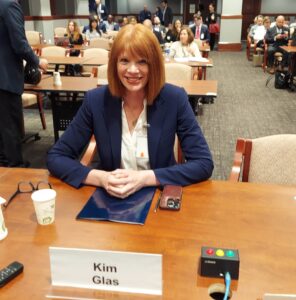
NCTO President and CEO Kim Glas delivered a clear message to the Office of the U.S. Trade Representative (USTR) and an interagency panel at the Section 301 forced labor hearing last Thursday: the administration has a historic opportunity to combat forced labor and strengthen American manufacturing, but a proposed textile mechanism would harm the very industry the administration seeks to support.
Glas’ testimony came on the third day of interagency government hearings this week on USTR’s proposed actions as part of its Section 301 investigations of the acts, policies, and practices of 60 economies related to goods made with forced labor.
She testified that a proposed textile mechanism by USTR in its current form would undermine domestic textile manufacturing and reward Asian apparel producers that directly compete with U.S. and Western Hemisphere supply chains.
“Why are we creating a textile mechanism that harms U.S. textile manufacturers when we have a historic opportunity to create something beneficial that supports the whole supply chain?” she asked the government panel. “Unfortunately, the U.S. textile industry is compelled to oppose the textile mechanism in its current form since it harms U.S. manufacturers,” Glas said.
Including raw cotton in the mechanism would create “an offshoring incentive by lowering the cost of Asian apparel imports that compete directly against manufacturing in the United States and the Western Hemisphere,” artificially raising cotton prices for U.S. textile mills, and providing a tariff benefit to Asian producers, Glas noted.
She proposed three key recommendations to reform USTR’s textile mechanism.
- Reject the inclusion of U.S. raw cotton, which would hurt domestic manufacturers, drive offshoring of domestic yarn and fabric production, and subsidize Asian apparel that competes directly with manufacturing in the U.S. and the Western Hemisphere.
- Exclude textile inputs and machinery not available in the U.S. from Section 301 tariffs to maintain the global competitiveness of domestic textile manufacturers. Glas pressed its inclusion in the textile mechanism to help domestic manufacturers compete globally. NCTO has led a working group that continues to press administration officials for this relief in any textile mechanism and has included this as a critical priority in all comments and submissions. This was also amplified by other textile industry panelists throughout the day.
- Develop an incentive program with the U.S. industry that will grow American jobs and exports.
Glas commended USTR for proposing to exclude qualifying textile and apparel goods under the U.S.-Mexico-Canada Agreement (USMCA) and the Dominican Republic-Central America Agreement (CAFTA-DR) from the Section 301 proposed actions.
Roughly 70 percent of total U.S. textile and apparel exports annually go to the Western Hemisphere, making it an essential supply chain that competes directly against Asia.
And she also applauded the administration for proposing additional duties on imports of apparel and finished textiles from countries with a record of forced labor to “take aim at these unfair trade practices, noting “no other industry has been more disadvantaged by forced labor than the U.S. textile industry and our Western Hemisphere trade partners.”
In addition, effective enforcement of the Uyghur Forced Labor Prevention Act (UFLPA), which bans imports made with Uyghur forced labor, including Xinjiang cotton, would “immediately drive U.S. cotton demand without harming the U.S. textile industry.” She urged the administration to ramp up enforcement, which by every measure has declined, immediately.
Meanwhile, cotton industry representatives argued the USTR mechanism would encourage additional exports of U.S. cotton at a time when the industry is losing market share to major cotton producing countries like Brazil
“The U.S. textile industry strongly supports our U.S. farmers; we understand their plight,” Glas told the panel. “We are buying virtually all U.S. cotton for our supply chains.”
“We know we are on different sides on this issue, but we can’t solve a competitiveness issue with Brazil by hurting our domestic textile manufacturers,” she noted.
Asked by a Commerce Department official what the “right” mechanism should look like, Glas pointed to the joint trade incentive proposal NCTO developed with brands and retailers.
She pointed to the joint proposal NCTO has developed with brands and retailers that would be a “win for everyone – including cotton farmers,” by incentivizing greater sourcing of U.S. textiles and apparel from Western Hemisphere countries, she said.
“We believe this plan would double U.S. exports and create over 56,000 U.S. jobs.”
“The joint proposal would allow accounts to be opened by brands and retailers, based on sourcing of qualified goods from the hemisphere they could apply to offset tariffs on eligible Section 301 countries,” she told the panel. “It helps to do what the president wants to do—onshore more production.”
“This is an innovative and landmark approach, and we are urging the administration to strongly consider it,” she added.
** Kim’s full prepared remarks and testimony here.
**NCTO’s full written submission to USTR here.
**Joint incentive program developed by NCTO, the American Apparel & Footwear Association (AAFA), U.S. Fashion Industry Association (USFIA), and U.S. Industrial and Narrow Fabrics Institute.
###
